Our Environment

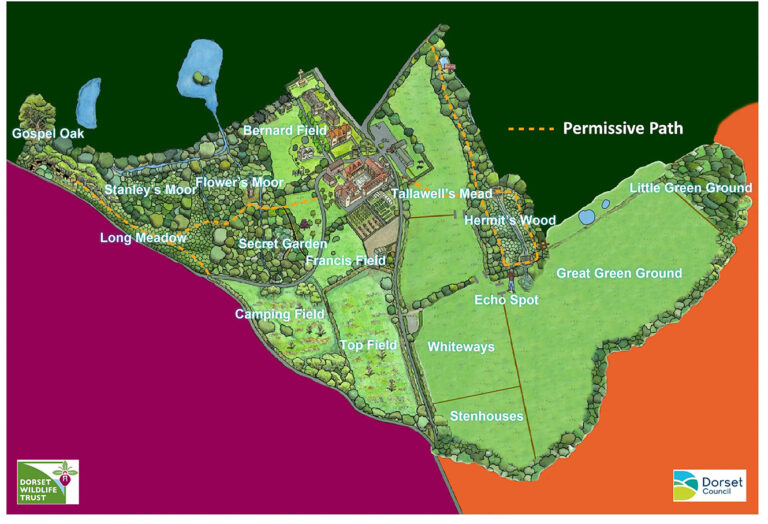
Map of the land around the friary
Long Meadow
This wood was planted on an old meadow. Some of the tree species that were planted were killed by squirrel damage, leaving a wood dominated by ash and cherry. We plan to convert it in to woodland pasture for grazing, and hope that this will encourage species such as orchids, saxifrage and archangel: a much more varied and valuable habitat than before.
Stanley’s Moor
This is an excellent example of a wet woodland, and one of our most environmentally valuable woods. It is a neglected alder coppice, where the stools have grown into multi-stemmed trees. We leave dead and fallen trees alone: the dead wood is important for many species, including the rare Bechstein’s bat. It has a range of interesting plants associated with wet woodlands, with some particularly beautiful mosses and sedges. Walking here would damage the vulnerable soils, so we ask guests not to enter this woodland.
Flower’s Moor
This area was planted in 2007, with a good mix of broadleaf trees. Since then there has been a lot of natural regeneration, especially of alder and willow. These trees love wet soils and are key species in wet woodlands. This is great news for wildlife as this is a precious and pressured habitat we are keen to encourage. Rare species that love wet woodlands such as flycatchers and marsh tits have already been making good use of this emergent resource.
Secret Garden
This beautiful “hidden” secret was for years the work of Br Vincent. It was a huge undertaking. It became a National Garden Scheme venue. After Br Vincent’s death in 2020, community member Tony has carried on the wonderful work. He has created well-defined paths for visitors to follow.
Bernard Field
Bernard Field is managed to provide grazing rather than biodiversity. It is somewhere the sheep can go when we can’t have them on the wildflower meadows – otherwise they would eat the Orchids. As a result, it is not very biodiverse.
Camping Field
This is our jewel in the crown of our conservation efforts. It has belonged to the Friary since its foundation in the 1920s. It has therefore never been treated with fertiliser or pesticides. This has produced and incredibly biodiverse wildflower meadow. In late spring through early summer it is home to 9 different species of orchid alone! In summer it becomes home to up to 100 camperswho come for the Families Camp and the Youth Camp.
Top Field
We have been restoring this field as a wildflower meadow since 2007. This involves reducing the fertility to weaken the grasses through haymaking and grazing, giving the flowers a better chance. We introduced seed from the camping field by spreading green hay. It has responded very well, and whilde it still doesn’t have the diversity of the Camping Field, it does support an abundance of flowers. In autumn it is home to some interesting grassland fungi, including several species of waxcap.
Hermit’s Wood
This woodland gets its name because a well-known hermit, Brother Ramon, lived here in a hut during the 1980s. The spring here and the stream that flows through the woodland is one of the sources of the river Wriggle. Due to the presence of the stream, the woodland here is classified as wet woodland: a very important and valuable habitat. It supports a variety of rare species including a range of Sedges
Flora and Fauna
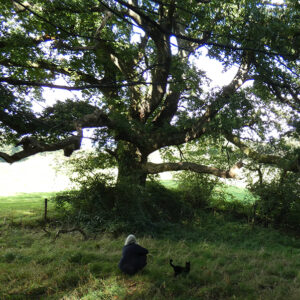
The Gospel Oak
This ancient oak tree lies at the far end of Long Meadow, at the boundary of the Hilfield land. It is always included in the Rogation Day beating of the bounds.
Farm animals
Shetland Cattle. The Friary has a small herd of pedigree rare breed Shetland Cattle to help in the management of our wildflower meadows and other grasslands. Shetlands are specially well suited to this job as they are extremely hardy and do very well on the rougher but arguably more nutritious food our meadows produce. Their patchy grazing helps to open up spaces for diversity within the meadows. Their cowpats help with this as well because we don’t treat the cows with insecticides they are home to dozens of different species of insect who in turn provide food for bats and birds. We also make use of the meat they produce. We send the boys for slaughter very locally when they are about 2 years old. We are committed to undertaking the butchery ourselves to ensure we are fully engaged with the realities of meat eating and that we honour the animal by making sure we don’t waste anything.
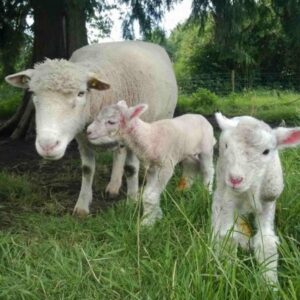
We have a small herd of Poll Dorset sheep and, more recently, a smaller herd of Castlemilk Moorit, a rare breed of domestic sheep originating in Dumfriesshire in Scotland. Created as a decorative breed in the 1900s to adorn the parkland of Sir John Buchanan Jardine's estate, it is a mixture of several primitive types: Manx Loaghtan, Shetland, Soay and Wiltshire Horn.
Wild animals and birds
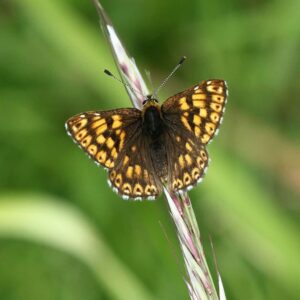
Conservation and Butterflies. We are part of Hi Stoy Conservation Cluster connecting neighbours with similar conservation interests like the missing piece of a jigsaw. Here neighbours offer encouragement, advice and practical support to one another as well developing a landscape scale approach to conservation. The Duke of Burgundy Butterfly is one of the species the group are in a good position to try and help collectively. This rare butterfly actually has two small colonies at either end of the land managed by members of the cluster. It is a great example of the importance and power of a landscape scale approach to conservation that is possible by working together.
Lots of wild animals and birds live on our land such as pheasants, foxes, hedgehogs, song thrushes and the visiting swallows use the lovely handmade next boxes plus their own built nests high in the eaves. It is a joy to listen to the birdsong throughout the year. One of the partners kindly donated some tit boxes which have been put up around the Friary and a neighbouring farm. A couple have already been used this year. The Friary have built a series of nest boxes, one for each partner. We have made a barn owl box and a kestrel box which will be put up on our neighbours land to help wildlife and celebrate our new partnership.
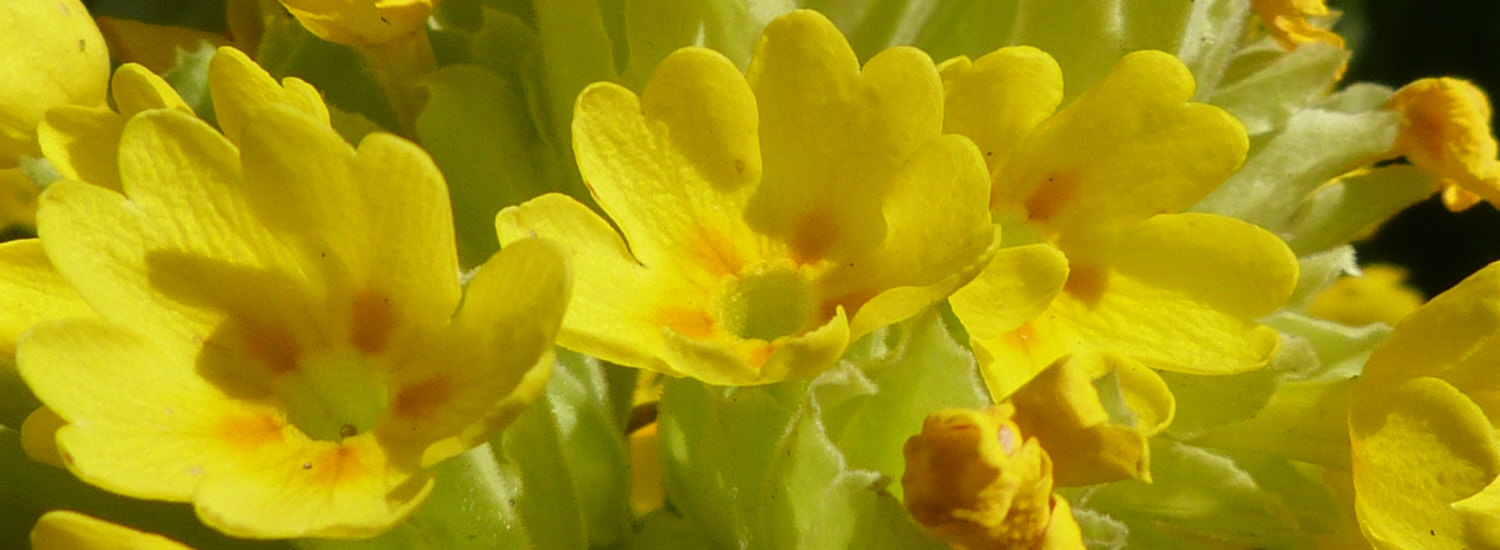
Rare plants
Text here
A Rocha UK

A Rocha UK is a Christian charity working for the protection and restoration of the natural world.
Visit their website: http://arocha.org.uk/
The Friary was the first community in the UK to be given an Eco Church Gold Award in recognition of the integrated ecology we are seeking to put into practice at Hilfield. The Partners in Action network is a collaborative network of Christian land managers demonstrating active care for the natural world and is coordinated by A Rocha UK. We work together in practical ways such as participating in joint conservation work like the Target Ten Project, by sharing ideas and information, and by praying for one another.
Partners in Action are youth outdoor centres, community groups, intentional communities and retreat centres. All of them are working for a positive impact on their land and their visitors out of a conviction that Christians have a responsibility to care for the natural world and those who inhabit it. Through Partners in Action, A Rocha UK helps support local initiatives to achieve their conservation-based goals. A Rocha UK can offer partners such services as – helping host events, conducting species surveys or providing conservation guidance. You can get involved with a Partner near you!